

3215 Macdonald St text amendment
Update: Due to a high volume of rezoning applications, staff will respond to the Q&A as soon as possible. Response times my exceed the standard two-day period. Additionally, the Q&A period has been extended to July 2, 2026.
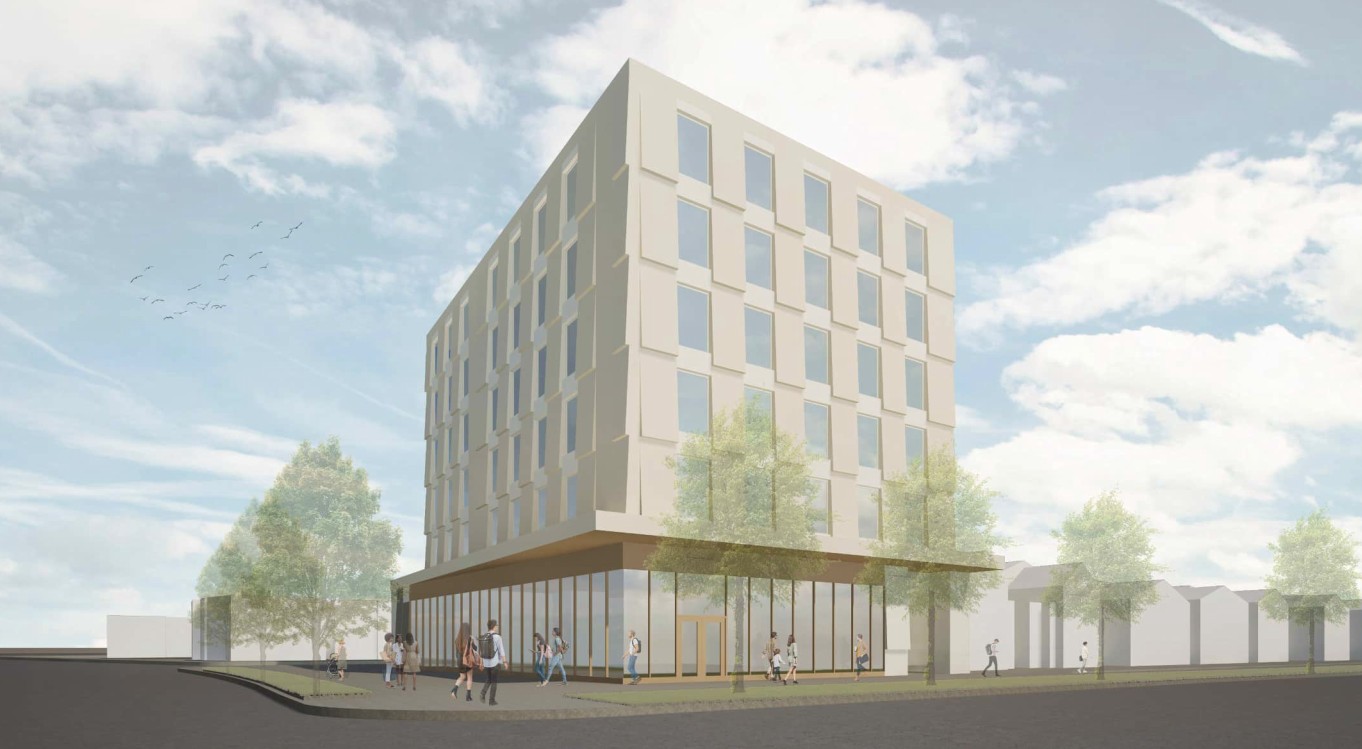
The City of Vancouver has received an application to amend CD-1 (25) (Comprehensive Development) District. The amendment is for a six-storey mixed-use building and includes:
- A change in use from residential rental to hotel, including 40 hotel units;
- An increase in floor space ratio (FSR) from 2.75 to 3.7; and
- An increase in height from five-storeys to six-storeys.
The proposed commercial space is to remain on ground floor as previously proposed.
This application is being considered under the Hotel Development Policy.
The previously approved application is linked here: https://www.shapeyourcity.ca/3215-macdonald-st
Application drawings and statistics are posted as-submitted to the City. Following staff review, the final project statistics are documented within the referral report.
Update: Due to a high volume of rezoning applications, staff will respond to the Q&A as soon as possible. Response times my exceed the standard two-day period. Additionally, the Q&A period has been extended to July 2, 2026.
The City of Vancouver has received an application to amend CD-1 (25) (Comprehensive Development) District. The amendment is for a six-storey mixed-use building and includes:
- A change in use from residential rental to hotel, including 40 hotel units;
- An increase in floor space ratio (FSR) from 2.75 to 3.7; and
- An increase in height from five-storeys to six-storeys.
The proposed commercial space is to remain on ground floor as previously proposed.
This application is being considered under the Hotel Development Policy.
The previously approved application is linked here: https://www.shapeyourcity.ca/3215-macdonald-st
Application drawings and statistics are posted as-submitted to the City. Following staff review, the final project statistics are documented within the referral report.
The opportunity to ask questions through the Q&A is available from May 27 to July 2, 2026.
We post all questions as-is and aim to respond within two business days. Some questions may require coordination with internal departments and additional time may be needed to post a response.
Please note that the comment form will remain open after the Q&A period. The Rezoning Planner can also be contacted directly for any further feedback or questions.
-
Share Question 1 Excluding any arguments regarding increased municipal tax revenue, why is the City on one hand claiming to solve the housing crisis under the Housing Vancouver Strategy, while simultaneously contemplating a text amendment that erases 22 approved long-term homes from the housing pipeline in favor of a corporate-run digital hotel? Furthermore, is it not entirely contradictory to enforce a strict short-term rental ban to protect neighborhood housing stock, while simultaneously allowing a tech-driven hospitality brand to bypass those exact rules on a quiet local corner that sits completely outside designated rapid transit and hotel development zones? Question 2 To any unbiased observer, it is clear that the initial proposal for a 22-unit residential building functioned as a regulatory "Trojan Horse" to secure the initial density and land-use approvals. Allowing this subsequent text amendment sets a dangerous precedent that encourages developers to use rental housing as a tactical bait-and-switch to unlock commercial zoning. If Council approves this hotel, how can the public maintain any trust in your housing strategies when a developer can simply flip approved homes into a contactless tourist operation before construction even begins? If this application succeeds, on what objective policy basis will Council be able to reject future, identical proposals that also directly contradict Vancouver's housing mandates? Council must recognize that the stakes here are much larger than just 3215 Macdonald Street; approving this amendment creates a repeatable playbook for developers to exploit at the direct expense of our secured housing pipeline. Question 3 With the vacancy rate of older Class B and C office buildings in Vancouver currently sitting at 18%, and given that this exact developer has a proven track record of successfully converting vacant commercial space into digital hotels downtown, why is this Council allowing them to ignore that empty commercial inventory in order to cannibalize a secured neighborhood rental housing pipeline? Why is the City not steering this developer to repurpose existing, under-utilized commercial assets where the infrastructure already exists, and protecting valuable residential housing stock? on Facebook Share Question 1 Excluding any arguments regarding increased municipal tax revenue, why is the City on one hand claiming to solve the housing crisis under the Housing Vancouver Strategy, while simultaneously contemplating a text amendment that erases 22 approved long-term homes from the housing pipeline in favor of a corporate-run digital hotel? Furthermore, is it not entirely contradictory to enforce a strict short-term rental ban to protect neighborhood housing stock, while simultaneously allowing a tech-driven hospitality brand to bypass those exact rules on a quiet local corner that sits completely outside designated rapid transit and hotel development zones? Question 2 To any unbiased observer, it is clear that the initial proposal for a 22-unit residential building functioned as a regulatory "Trojan Horse" to secure the initial density and land-use approvals. Allowing this subsequent text amendment sets a dangerous precedent that encourages developers to use rental housing as a tactical bait-and-switch to unlock commercial zoning. If Council approves this hotel, how can the public maintain any trust in your housing strategies when a developer can simply flip approved homes into a contactless tourist operation before construction even begins? If this application succeeds, on what objective policy basis will Council be able to reject future, identical proposals that also directly contradict Vancouver's housing mandates? Council must recognize that the stakes here are much larger than just 3215 Macdonald Street; approving this amendment creates a repeatable playbook for developers to exploit at the direct expense of our secured housing pipeline. Question 3 With the vacancy rate of older Class B and C office buildings in Vancouver currently sitting at 18%, and given that this exact developer has a proven track record of successfully converting vacant commercial space into digital hotels downtown, why is this Council allowing them to ignore that empty commercial inventory in order to cannibalize a secured neighborhood rental housing pipeline? Why is the City not steering this developer to repurpose existing, under-utilized commercial assets where the infrastructure already exists, and protecting valuable residential housing stock? on X (formerly Twitter) Share Question 1 Excluding any arguments regarding increased municipal tax revenue, why is the City on one hand claiming to solve the housing crisis under the Housing Vancouver Strategy, while simultaneously contemplating a text amendment that erases 22 approved long-term homes from the housing pipeline in favor of a corporate-run digital hotel? Furthermore, is it not entirely contradictory to enforce a strict short-term rental ban to protect neighborhood housing stock, while simultaneously allowing a tech-driven hospitality brand to bypass those exact rules on a quiet local corner that sits completely outside designated rapid transit and hotel development zones? Question 2 To any unbiased observer, it is clear that the initial proposal for a 22-unit residential building functioned as a regulatory "Trojan Horse" to secure the initial density and land-use approvals. Allowing this subsequent text amendment sets a dangerous precedent that encourages developers to use rental housing as a tactical bait-and-switch to unlock commercial zoning. If Council approves this hotel, how can the public maintain any trust in your housing strategies when a developer can simply flip approved homes into a contactless tourist operation before construction even begins? If this application succeeds, on what objective policy basis will Council be able to reject future, identical proposals that also directly contradict Vancouver's housing mandates? Council must recognize that the stakes here are much larger than just 3215 Macdonald Street; approving this amendment creates a repeatable playbook for developers to exploit at the direct expense of our secured housing pipeline. Question 3 With the vacancy rate of older Class B and C office buildings in Vancouver currently sitting at 18%, and given that this exact developer has a proven track record of successfully converting vacant commercial space into digital hotels downtown, why is this Council allowing them to ignore that empty commercial inventory in order to cannibalize a secured neighborhood rental housing pipeline? Why is the City not steering this developer to repurpose existing, under-utilized commercial assets where the infrastructure already exists, and protecting valuable residential housing stock? on Linkedin Email Question 1 Excluding any arguments regarding increased municipal tax revenue, why is the City on one hand claiming to solve the housing crisis under the Housing Vancouver Strategy, while simultaneously contemplating a text amendment that erases 22 approved long-term homes from the housing pipeline in favor of a corporate-run digital hotel? Furthermore, is it not entirely contradictory to enforce a strict short-term rental ban to protect neighborhood housing stock, while simultaneously allowing a tech-driven hospitality brand to bypass those exact rules on a quiet local corner that sits completely outside designated rapid transit and hotel development zones? Question 2 To any unbiased observer, it is clear that the initial proposal for a 22-unit residential building functioned as a regulatory "Trojan Horse" to secure the initial density and land-use approvals. Allowing this subsequent text amendment sets a dangerous precedent that encourages developers to use rental housing as a tactical bait-and-switch to unlock commercial zoning. If Council approves this hotel, how can the public maintain any trust in your housing strategies when a developer can simply flip approved homes into a contactless tourist operation before construction even begins? If this application succeeds, on what objective policy basis will Council be able to reject future, identical proposals that also directly contradict Vancouver's housing mandates? Council must recognize that the stakes here are much larger than just 3215 Macdonald Street; approving this amendment creates a repeatable playbook for developers to exploit at the direct expense of our secured housing pipeline. Question 3 With the vacancy rate of older Class B and C office buildings in Vancouver currently sitting at 18%, and given that this exact developer has a proven track record of successfully converting vacant commercial space into digital hotels downtown, why is this Council allowing them to ignore that empty commercial inventory in order to cannibalize a secured neighborhood rental housing pipeline? Why is the City not steering this developer to repurpose existing, under-utilized commercial assets where the infrastructure already exists, and protecting valuable residential housing stock? link
Question 1 Excluding any arguments regarding increased municipal tax revenue, why is the City on one hand claiming to solve the housing crisis under the Housing Vancouver Strategy, while simultaneously contemplating a text amendment that erases 22 approved long-term homes from the housing pipeline in favor of a corporate-run digital hotel? Furthermore, is it not entirely contradictory to enforce a strict short-term rental ban to protect neighborhood housing stock, while simultaneously allowing a tech-driven hospitality brand to bypass those exact rules on a quiet local corner that sits completely outside designated rapid transit and hotel development zones? Question 2 To any unbiased observer, it is clear that the initial proposal for a 22-unit residential building functioned as a regulatory "Trojan Horse" to secure the initial density and land-use approvals. Allowing this subsequent text amendment sets a dangerous precedent that encourages developers to use rental housing as a tactical bait-and-switch to unlock commercial zoning. If Council approves this hotel, how can the public maintain any trust in your housing strategies when a developer can simply flip approved homes into a contactless tourist operation before construction even begins? If this application succeeds, on what objective policy basis will Council be able to reject future, identical proposals that also directly contradict Vancouver's housing mandates? Council must recognize that the stakes here are much larger than just 3215 Macdonald Street; approving this amendment creates a repeatable playbook for developers to exploit at the direct expense of our secured housing pipeline. Question 3 With the vacancy rate of older Class B and C office buildings in Vancouver currently sitting at 18%, and given that this exact developer has a proven track record of successfully converting vacant commercial space into digital hotels downtown, why is this Council allowing them to ignore that empty commercial inventory in order to cannibalize a secured neighborhood rental housing pipeline? Why is the City not steering this developer to repurpose existing, under-utilized commercial assets where the infrastructure already exists, and protecting valuable residential housing stock?
Tom338911 asked 3 months agoThank you for the questions. The applicant has proposed to amend the CD-1 (25) By-law to allow for hotel uses. The proposal is consistent with direction contained in the Hotel Development Policy, which allows for consideration of rezonings for hotel uses on commercial high streets, including Macdonald Street and West 16th Avenue. The density and height proposed is anticipated in the applicable policy. Addressing housing affordability continues to be a priority for the City. You can learn more about housing initiatives and policies here.
-
Share What feasibility studies regarding traffic and congestion in the intersection at MacDonald and 16th Avenue will be done before approving the hotel plan? Currently there is a busy gas station, a bus stop, egress from 17th Avenue and lots of traffic on 16th and MacDonald. It is already difficult for citizens to exit on to MacDonald from 17th Avenue. Hotel traffic will make this area dangerous for pedestrians and drivers. on Facebook Share What feasibility studies regarding traffic and congestion in the intersection at MacDonald and 16th Avenue will be done before approving the hotel plan? Currently there is a busy gas station, a bus stop, egress from 17th Avenue and lots of traffic on 16th and MacDonald. It is already difficult for citizens to exit on to MacDonald from 17th Avenue. Hotel traffic will make this area dangerous for pedestrians and drivers. on X (formerly Twitter) Share What feasibility studies regarding traffic and congestion in the intersection at MacDonald and 16th Avenue will be done before approving the hotel plan? Currently there is a busy gas station, a bus stop, egress from 17th Avenue and lots of traffic on 16th and MacDonald. It is already difficult for citizens to exit on to MacDonald from 17th Avenue. Hotel traffic will make this area dangerous for pedestrians and drivers. on Linkedin Email What feasibility studies regarding traffic and congestion in the intersection at MacDonald and 16th Avenue will be done before approving the hotel plan? Currently there is a busy gas station, a bus stop, egress from 17th Avenue and lots of traffic on 16th and MacDonald. It is already difficult for citizens to exit on to MacDonald from 17th Avenue. Hotel traffic will make this area dangerous for pedestrians and drivers. link
What feasibility studies regarding traffic and congestion in the intersection at MacDonald and 16th Avenue will be done before approving the hotel plan? Currently there is a busy gas station, a bus stop, egress from 17th Avenue and lots of traffic on 16th and MacDonald. It is already difficult for citizens to exit on to MacDonald from 17th Avenue. Hotel traffic will make this area dangerous for pedestrians and drivers.
Stephanie V asked 3 months agoPlease refer to previous responses regarding expressed concerns about transportation impacts on this application’s Q&A page:
As part of the rezoning process, Engineering staff include a review of the application with respect to transportation impacts and, if identified, may include development conditions for off-site requirements to improve transportation operations and safety for pedestrians, cyclists, and motorists adjacent to the site. The application is still under review and the details of any transportation-related upgrades will be included in the final report to Council.
-
Share This property was previously approved as a 22 unit rental unit, and is now being changed to a transient hotel,with no services or tourist destinations nearby. Why is rental accommodation being removed when there is a housing shortage in the city? on Facebook Share This property was previously approved as a 22 unit rental unit, and is now being changed to a transient hotel,with no services or tourist destinations nearby. Why is rental accommodation being removed when there is a housing shortage in the city? on X (formerly Twitter) Share This property was previously approved as a 22 unit rental unit, and is now being changed to a transient hotel,with no services or tourist destinations nearby. Why is rental accommodation being removed when there is a housing shortage in the city? on Linkedin Email This property was previously approved as a 22 unit rental unit, and is now being changed to a transient hotel,with no services or tourist destinations nearby. Why is rental accommodation being removed when there is a housing shortage in the city? link
This property was previously approved as a 22 unit rental unit, and is now being changed to a transient hotel,with no services or tourist destinations nearby. Why is rental accommodation being removed when there is a housing shortage in the city?
Libby Vance asked 3 months agoIt is common for applicants to revise or change previously approved proposals which then undergo a new review process.
The applicant has provided the following response with regards to the change from rental residential to hotel use: Due to recent City of Vancouver policy changes that increasingly support hotel use, we will be transitioning our property from residential rentals to hotel use. This change reflects the evolving form and use and allows us to align with the City’s vision for the area.
-
Share While the developer technically meets current bylaws at 3215 Macdonald Street, this situation exposes a major policy loophole. Bypassing a new physical signboard simply because the site was rezoned in 2025 ignores a critical reality: a fundamental change in a building's operational use is just as impactful to a neighborhood as a change to its physical shape.The original site sign prepared the community for long-term residential housing. The new text amendment quietly pivots to a 40-room commercial hotel with increased density ($FSR$ 2.75 to 3.7). To the neighborhood, shifting from homes to transit accommodation is a massive deviation from what was agreed upon. Relying solely on mail-outs and digital portals to announce this shift creates a serious transparency gap, placing an unfair burden on residents to constantly monitor online registries. To protect public trust and ensure true consultation, the City must close this loophole by requiring updated on-site physical signboards whenever an amendment fundamentally alters a project's original use and density. What specific thresholds of use or density changes currently trigger a mandatory update to an on-site physical notification board? If a complete shift from residential to commercial hotel use does not trigger a new sign under current policies, what concrete steps will the Planning Department take to close this communication loophole for future amendments? on Facebook Share While the developer technically meets current bylaws at 3215 Macdonald Street, this situation exposes a major policy loophole. Bypassing a new physical signboard simply because the site was rezoned in 2025 ignores a critical reality: a fundamental change in a building's operational use is just as impactful to a neighborhood as a change to its physical shape.The original site sign prepared the community for long-term residential housing. The new text amendment quietly pivots to a 40-room commercial hotel with increased density ($FSR$ 2.75 to 3.7). To the neighborhood, shifting from homes to transit accommodation is a massive deviation from what was agreed upon. Relying solely on mail-outs and digital portals to announce this shift creates a serious transparency gap, placing an unfair burden on residents to constantly monitor online registries. To protect public trust and ensure true consultation, the City must close this loophole by requiring updated on-site physical signboards whenever an amendment fundamentally alters a project's original use and density. What specific thresholds of use or density changes currently trigger a mandatory update to an on-site physical notification board? If a complete shift from residential to commercial hotel use does not trigger a new sign under current policies, what concrete steps will the Planning Department take to close this communication loophole for future amendments? on X (formerly Twitter) Share While the developer technically meets current bylaws at 3215 Macdonald Street, this situation exposes a major policy loophole. Bypassing a new physical signboard simply because the site was rezoned in 2025 ignores a critical reality: a fundamental change in a building's operational use is just as impactful to a neighborhood as a change to its physical shape.The original site sign prepared the community for long-term residential housing. The new text amendment quietly pivots to a 40-room commercial hotel with increased density ($FSR$ 2.75 to 3.7). To the neighborhood, shifting from homes to transit accommodation is a massive deviation from what was agreed upon. Relying solely on mail-outs and digital portals to announce this shift creates a serious transparency gap, placing an unfair burden on residents to constantly monitor online registries. To protect public trust and ensure true consultation, the City must close this loophole by requiring updated on-site physical signboards whenever an amendment fundamentally alters a project's original use and density. What specific thresholds of use or density changes currently trigger a mandatory update to an on-site physical notification board? If a complete shift from residential to commercial hotel use does not trigger a new sign under current policies, what concrete steps will the Planning Department take to close this communication loophole for future amendments? on Linkedin Email While the developer technically meets current bylaws at 3215 Macdonald Street, this situation exposes a major policy loophole. Bypassing a new physical signboard simply because the site was rezoned in 2025 ignores a critical reality: a fundamental change in a building's operational use is just as impactful to a neighborhood as a change to its physical shape.The original site sign prepared the community for long-term residential housing. The new text amendment quietly pivots to a 40-room commercial hotel with increased density ($FSR$ 2.75 to 3.7). To the neighborhood, shifting from homes to transit accommodation is a massive deviation from what was agreed upon. Relying solely on mail-outs and digital portals to announce this shift creates a serious transparency gap, placing an unfair burden on residents to constantly monitor online registries. To protect public trust and ensure true consultation, the City must close this loophole by requiring updated on-site physical signboards whenever an amendment fundamentally alters a project's original use and density. What specific thresholds of use or density changes currently trigger a mandatory update to an on-site physical notification board? If a complete shift from residential to commercial hotel use does not trigger a new sign under current policies, what concrete steps will the Planning Department take to close this communication loophole for future amendments? link
While the developer technically meets current bylaws at 3215 Macdonald Street, this situation exposes a major policy loophole. Bypassing a new physical signboard simply because the site was rezoned in 2025 ignores a critical reality: a fundamental change in a building's operational use is just as impactful to a neighborhood as a change to its physical shape.The original site sign prepared the community for long-term residential housing. The new text amendment quietly pivots to a 40-room commercial hotel with increased density ($FSR$ 2.75 to 3.7). To the neighborhood, shifting from homes to transit accommodation is a massive deviation from what was agreed upon. Relying solely on mail-outs and digital portals to announce this shift creates a serious transparency gap, placing an unfair burden on residents to constantly monitor online registries. To protect public trust and ensure true consultation, the City must close this loophole by requiring updated on-site physical signboards whenever an amendment fundamentally alters a project's original use and density. What specific thresholds of use or density changes currently trigger a mandatory update to an on-site physical notification board? If a complete shift from residential to commercial hotel use does not trigger a new sign under current policies, what concrete steps will the Planning Department take to close this communication loophole for future amendments?
tom338911 asked 3 months agoStaff must process applications that have been submitted. Each development application is evaluated on its own merits and in the context of applicable Council-approved policies and by-laws. In this case, the application is being evaluated against the City's Hotel Development Policy and the draft Villages Plan, which identify this location as appropriate for consideration of hotel use. It is also common for applicants to revise or change previously approved proposals, which then undergo a new review process.
-
Share Why is the City even considering this hotel option after previously approving a 5-story rental bldg which is more more suited to this location? on Facebook Share Why is the City even considering this hotel option after previously approving a 5-story rental bldg which is more more suited to this location? on X (formerly Twitter) Share Why is the City even considering this hotel option after previously approving a 5-story rental bldg which is more more suited to this location? on Linkedin Email Why is the City even considering this hotel option after previously approving a 5-story rental bldg which is more more suited to this location? link
Why is the City even considering this hotel option after previously approving a 5-story rental bldg which is more more suited to this location?
Masters asked 3 months agoPlease see a previous response to a similar question:
Staff must process applications that have been submitted. Each development application is evaluated on its own merits and in the context of applicable Council-approved policies and by-laws. In this case, the application is being evaluated against the City's Hotel Development Policy and the draft Villages Plan, which identify this location as appropriate for consideration of hotel use. It is also common for applicants to revise or change previously approved proposals, which then undergo a new review process.
-
Share You are proposing that the nature of the building is now shifting from longer term residents who will be part of the community to overnight visitors who have little interest in the community. The existing neighborhood is a very stable with long term home owners and this will negatively impact the neighborhood. The proposed area is also a long way from rapid transit, which is on Broadway, and not a short walk for older or young persons. Why are you not instead moving a hotel to more suitable areas like on Broadway which has much more infrastructure to support visitors who are not part of the community and is not residential? This is simply catering to the objectives of a developer rather without concern for the community. on Facebook Share You are proposing that the nature of the building is now shifting from longer term residents who will be part of the community to overnight visitors who have little interest in the community. The existing neighborhood is a very stable with long term home owners and this will negatively impact the neighborhood. The proposed area is also a long way from rapid transit, which is on Broadway, and not a short walk for older or young persons. Why are you not instead moving a hotel to more suitable areas like on Broadway which has much more infrastructure to support visitors who are not part of the community and is not residential? This is simply catering to the objectives of a developer rather without concern for the community. on X (formerly Twitter) Share You are proposing that the nature of the building is now shifting from longer term residents who will be part of the community to overnight visitors who have little interest in the community. The existing neighborhood is a very stable with long term home owners and this will negatively impact the neighborhood. The proposed area is also a long way from rapid transit, which is on Broadway, and not a short walk for older or young persons. Why are you not instead moving a hotel to more suitable areas like on Broadway which has much more infrastructure to support visitors who are not part of the community and is not residential? This is simply catering to the objectives of a developer rather without concern for the community. on Linkedin Email You are proposing that the nature of the building is now shifting from longer term residents who will be part of the community to overnight visitors who have little interest in the community. The existing neighborhood is a very stable with long term home owners and this will negatively impact the neighborhood. The proposed area is also a long way from rapid transit, which is on Broadway, and not a short walk for older or young persons. Why are you not instead moving a hotel to more suitable areas like on Broadway which has much more infrastructure to support visitors who are not part of the community and is not residential? This is simply catering to the objectives of a developer rather without concern for the community. link
You are proposing that the nature of the building is now shifting from longer term residents who will be part of the community to overnight visitors who have little interest in the community. The existing neighborhood is a very stable with long term home owners and this will negatively impact the neighborhood. The proposed area is also a long way from rapid transit, which is on Broadway, and not a short walk for older or young persons. Why are you not instead moving a hotel to more suitable areas like on Broadway which has much more infrastructure to support visitors who are not part of the community and is not residential? This is simply catering to the objectives of a developer rather without concern for the community.
DRoss asked 3 months agoThe applicant has provided the following information regarding the application: Due to recent City of Vancouver policy changes that increasingly support hotel use, we will be transitioning our property from residential rentals to hotel use. This change reflects the evolving form and use and allows us to align with the City’s vision for the area.
-
Share The proposed six-storey hotel exceeds the existing scale and character of the surrounding residential neighbourhood. On site parking is inadequate, and neighbourhood parking is already limited. Has the developer completed a noise study addressing noise impacts to the neighbourhood? Given the height, scale, parking concerns, and a lack of a comprehensive noise assessment, what evidence does the City or developer have that this proposal will not negatively impact the existing residential community? on Facebook Share The proposed six-storey hotel exceeds the existing scale and character of the surrounding residential neighbourhood. On site parking is inadequate, and neighbourhood parking is already limited. Has the developer completed a noise study addressing noise impacts to the neighbourhood? Given the height, scale, parking concerns, and a lack of a comprehensive noise assessment, what evidence does the City or developer have that this proposal will not negatively impact the existing residential community? on X (formerly Twitter) Share The proposed six-storey hotel exceeds the existing scale and character of the surrounding residential neighbourhood. On site parking is inadequate, and neighbourhood parking is already limited. Has the developer completed a noise study addressing noise impacts to the neighbourhood? Given the height, scale, parking concerns, and a lack of a comprehensive noise assessment, what evidence does the City or developer have that this proposal will not negatively impact the existing residential community? on Linkedin Email The proposed six-storey hotel exceeds the existing scale and character of the surrounding residential neighbourhood. On site parking is inadequate, and neighbourhood parking is already limited. Has the developer completed a noise study addressing noise impacts to the neighbourhood? Given the height, scale, parking concerns, and a lack of a comprehensive noise assessment, what evidence does the City or developer have that this proposal will not negatively impact the existing residential community? link
The proposed six-storey hotel exceeds the existing scale and character of the surrounding residential neighbourhood. On site parking is inadequate, and neighbourhood parking is already limited. Has the developer completed a noise study addressing noise impacts to the neighbourhood? Given the height, scale, parking concerns, and a lack of a comprehensive noise assessment, what evidence does the City or developer have that this proposal will not negatively impact the existing residential community?
El Rey asked 3 months agoThe City is required to evaluate the application submitted by the applicant against applicable Council-approved policies and by-laws. The Hotel Development Policy and the draft Villages Plan identify this location as appropriate for consideration of hotel use which allows the development of hotels along Commercial High Streets. A maximum floor space ratio (FSR) of 3.50 FSR for all uses combined, or 3.70 FSR for corner sites and a maximum building height of 22.00 m (72.2 ft) and 6-storeys can be considered. Please see other posted responses to similar questions regarding parking and noise.
-
Share What privacy impacts were studied for neighbouring homes? Will the hotel have 24 hour management/security? How will residents concerns be handled? Was a traffic study completed for the area? on Facebook Share What privacy impacts were studied for neighbouring homes? Will the hotel have 24 hour management/security? How will residents concerns be handled? Was a traffic study completed for the area? on X (formerly Twitter) Share What privacy impacts were studied for neighbouring homes? Will the hotel have 24 hour management/security? How will residents concerns be handled? Was a traffic study completed for the area? on Linkedin Email What privacy impacts were studied for neighbouring homes? Will the hotel have 24 hour management/security? How will residents concerns be handled? Was a traffic study completed for the area? link
What privacy impacts were studied for neighbouring homes? Will the hotel have 24 hour management/security? How will residents concerns be handled? Was a traffic study completed for the area?
Veronica Roberts asked 3 months agoPlease refer to a posted previous response to a similar question:
The applicant has provided the following response: There will be 24/7 guest services: Our reservations and guest support team is staffed around the clock and is the first point of contact for any issue, day or night. On-site management: A dedicated market supervisor and operations lead manage the property, with an on-call rotation covering evenings and overnight for anything urgent - noise, access issues, maintenance emergencies. Response times are tracked, and urgent matters get a live person on-site or on the phone directly.
-
Share What measures will be taken to ensure the negative impacts on residents of this proposal be mitigated ? • Increased traffic and congestion on local streets. • Additional parking demand and spillover parking in the neighbourhood. • Noise impacts from hotel operations, deliveries, and guest activity. • The scale and height of the proposed building relative to nearby homes and buildings. on Facebook Share What measures will be taken to ensure the negative impacts on residents of this proposal be mitigated ? • Increased traffic and congestion on local streets. • Additional parking demand and spillover parking in the neighbourhood. • Noise impacts from hotel operations, deliveries, and guest activity. • The scale and height of the proposed building relative to nearby homes and buildings. on X (formerly Twitter) Share What measures will be taken to ensure the negative impacts on residents of this proposal be mitigated ? • Increased traffic and congestion on local streets. • Additional parking demand and spillover parking in the neighbourhood. • Noise impacts from hotel operations, deliveries, and guest activity. • The scale and height of the proposed building relative to nearby homes and buildings. on Linkedin Email What measures will be taken to ensure the negative impacts on residents of this proposal be mitigated ? • Increased traffic and congestion on local streets. • Additional parking demand and spillover parking in the neighbourhood. • Noise impacts from hotel operations, deliveries, and guest activity. • The scale and height of the proposed building relative to nearby homes and buildings. link
What measures will be taken to ensure the negative impacts on residents of this proposal be mitigated ? • Increased traffic and congestion on local streets. • Additional parking demand and spillover parking in the neighbourhood. • Noise impacts from hotel operations, deliveries, and guest activity. • The scale and height of the proposed building relative to nearby homes and buildings.
Elizabeth J.Lee asked 3 months agoA similar question has been asked previously. Here is a copy of our earlier response:
Your comments have been forwarded to the reviewing departments, including Engineering, for consideration in their reviews of the application. As part of the rezoning process, Engineering staff include a review of the application with respect to transportation impacts and, if identified, may include development conditions for off-site requirements to improve transportation operations and safety for pedestrians, cyclists, and motorists adjacent to the site. The application is still under review, and the details of any transportation-related upgrades will be included in the final report to Council, which will be posted on the Shape Your City page once available.
If approved by Council, in future operational stages of the proposed hotel, noise complaints would be regulated by the City’s Noise Control By-law. More information on noise can be found here. Similarly, the City has a program to review and implement traffic calming measures at the neighbourhood level. If residents are concerned about speeding, safety or short-cutting on local streets in their neighbourhood, they can reach out to staff by contacting 311 or emailing trafficcalming@vancouver.ca.
In addition, the applicant has provided the following response:
There will be 24/7 guest services: Our reservations and guest support team is staffed around the clock and is the first point of contact for any issue, day or night. On-site management: A dedicated market supervisor and operations lead manage the property, with an on-call rotation covering evenings and overnight for anything urgent - noise, access issues, maintenance emergencies. Response times are tracked, and urgent matters get a live person on-site or on the phone directly.
-
Share The proposed hotel at 3215 Macdonald Street consists of a six-storey, 145-foot high building containing 40 hotel rooms on a 7,500 sq. ft. lot, with only 15 parking spaces, in what is primarily a residential neighbourhood. The scale and intensity of this development are significantly out of character with the surrounding community and raise serious concerns regarding noise, traffic, parking, safety, and overall livability. Unlike residential apartment buildings, hotels operate 24 hours a day and generate a continuous flow of guests, deliveries, ride-share vehicles, taxis, service traffic, and late-night activity. The proposed rooftop amenity space for hotel guests further increases concerns about noise and disruption for nearby residents. Parking in the area is already extremely limited. How does the City believe that 15 parking spaces will adequately serve a 40-room hotel, hotel staff, deliveries, and visitors? Where are overflow vehicles expected to park, and has the City fully considered the impact this will have on surrounding residential streets? Another major concern is the close proximity to Carnarvon Park, located only one block away. The park is heavily used by children and families every evening and weekend for sports and recreational activities. Has the City considered the additional traffic, congestion, and safety concerns that increased hotel activity could create near a park so actively used by children? I would appreciate responses to the following questions: • Why is the City considering a hotel of this scale on such a small lot in a residential area? • Has the City evaluated whether this proposal is compatible with the existing neighbourhood character? • Has the City considered the cumulative impact of increasing density and oversized developments already being approved in the area? • Has the City conducted a comprehensive traffic and parking impact assessment? • What measures will be implemented to address noise associated with rooftop amenity areas and hotel operations? • How will emergency access, garbage collection, deliveries, and ride-share traffic be managed on nearby residential streets? • Has the City considered the long-term impact this development may have on neighbouring property owners and overall quality of life? Many residents in the area are increasingly concerned that new developments are becoming larger, more intensive, and out of scale with established neighbourhoods, while infrastructure and parking remain inadequate. I respectfully ask City Council to reject this proposal or require a substantial redesign that is more appropriate for the surrounding residential community. I look forward to receiving responses to my questions above. on Facebook Share The proposed hotel at 3215 Macdonald Street consists of a six-storey, 145-foot high building containing 40 hotel rooms on a 7,500 sq. ft. lot, with only 15 parking spaces, in what is primarily a residential neighbourhood. The scale and intensity of this development are significantly out of character with the surrounding community and raise serious concerns regarding noise, traffic, parking, safety, and overall livability. Unlike residential apartment buildings, hotels operate 24 hours a day and generate a continuous flow of guests, deliveries, ride-share vehicles, taxis, service traffic, and late-night activity. The proposed rooftop amenity space for hotel guests further increases concerns about noise and disruption for nearby residents. Parking in the area is already extremely limited. How does the City believe that 15 parking spaces will adequately serve a 40-room hotel, hotel staff, deliveries, and visitors? Where are overflow vehicles expected to park, and has the City fully considered the impact this will have on surrounding residential streets? Another major concern is the close proximity to Carnarvon Park, located only one block away. The park is heavily used by children and families every evening and weekend for sports and recreational activities. Has the City considered the additional traffic, congestion, and safety concerns that increased hotel activity could create near a park so actively used by children? I would appreciate responses to the following questions: • Why is the City considering a hotel of this scale on such a small lot in a residential area? • Has the City evaluated whether this proposal is compatible with the existing neighbourhood character? • Has the City considered the cumulative impact of increasing density and oversized developments already being approved in the area? • Has the City conducted a comprehensive traffic and parking impact assessment? • What measures will be implemented to address noise associated with rooftop amenity areas and hotel operations? • How will emergency access, garbage collection, deliveries, and ride-share traffic be managed on nearby residential streets? • Has the City considered the long-term impact this development may have on neighbouring property owners and overall quality of life? Many residents in the area are increasingly concerned that new developments are becoming larger, more intensive, and out of scale with established neighbourhoods, while infrastructure and parking remain inadequate. I respectfully ask City Council to reject this proposal or require a substantial redesign that is more appropriate for the surrounding residential community. I look forward to receiving responses to my questions above. on X (formerly Twitter) Share The proposed hotel at 3215 Macdonald Street consists of a six-storey, 145-foot high building containing 40 hotel rooms on a 7,500 sq. ft. lot, with only 15 parking spaces, in what is primarily a residential neighbourhood. The scale and intensity of this development are significantly out of character with the surrounding community and raise serious concerns regarding noise, traffic, parking, safety, and overall livability. Unlike residential apartment buildings, hotels operate 24 hours a day and generate a continuous flow of guests, deliveries, ride-share vehicles, taxis, service traffic, and late-night activity. The proposed rooftop amenity space for hotel guests further increases concerns about noise and disruption for nearby residents. Parking in the area is already extremely limited. How does the City believe that 15 parking spaces will adequately serve a 40-room hotel, hotel staff, deliveries, and visitors? Where are overflow vehicles expected to park, and has the City fully considered the impact this will have on surrounding residential streets? Another major concern is the close proximity to Carnarvon Park, located only one block away. The park is heavily used by children and families every evening and weekend for sports and recreational activities. Has the City considered the additional traffic, congestion, and safety concerns that increased hotel activity could create near a park so actively used by children? I would appreciate responses to the following questions: • Why is the City considering a hotel of this scale on such a small lot in a residential area? • Has the City evaluated whether this proposal is compatible with the existing neighbourhood character? • Has the City considered the cumulative impact of increasing density and oversized developments already being approved in the area? • Has the City conducted a comprehensive traffic and parking impact assessment? • What measures will be implemented to address noise associated with rooftop amenity areas and hotel operations? • How will emergency access, garbage collection, deliveries, and ride-share traffic be managed on nearby residential streets? • Has the City considered the long-term impact this development may have on neighbouring property owners and overall quality of life? Many residents in the area are increasingly concerned that new developments are becoming larger, more intensive, and out of scale with established neighbourhoods, while infrastructure and parking remain inadequate. I respectfully ask City Council to reject this proposal or require a substantial redesign that is more appropriate for the surrounding residential community. I look forward to receiving responses to my questions above. on Linkedin Email The proposed hotel at 3215 Macdonald Street consists of a six-storey, 145-foot high building containing 40 hotel rooms on a 7,500 sq. ft. lot, with only 15 parking spaces, in what is primarily a residential neighbourhood. The scale and intensity of this development are significantly out of character with the surrounding community and raise serious concerns regarding noise, traffic, parking, safety, and overall livability. Unlike residential apartment buildings, hotels operate 24 hours a day and generate a continuous flow of guests, deliveries, ride-share vehicles, taxis, service traffic, and late-night activity. The proposed rooftop amenity space for hotel guests further increases concerns about noise and disruption for nearby residents. Parking in the area is already extremely limited. How does the City believe that 15 parking spaces will adequately serve a 40-room hotel, hotel staff, deliveries, and visitors? Where are overflow vehicles expected to park, and has the City fully considered the impact this will have on surrounding residential streets? Another major concern is the close proximity to Carnarvon Park, located only one block away. The park is heavily used by children and families every evening and weekend for sports and recreational activities. Has the City considered the additional traffic, congestion, and safety concerns that increased hotel activity could create near a park so actively used by children? I would appreciate responses to the following questions: • Why is the City considering a hotel of this scale on such a small lot in a residential area? • Has the City evaluated whether this proposal is compatible with the existing neighbourhood character? • Has the City considered the cumulative impact of increasing density and oversized developments already being approved in the area? • Has the City conducted a comprehensive traffic and parking impact assessment? • What measures will be implemented to address noise associated with rooftop amenity areas and hotel operations? • How will emergency access, garbage collection, deliveries, and ride-share traffic be managed on nearby residential streets? • Has the City considered the long-term impact this development may have on neighbouring property owners and overall quality of life? Many residents in the area are increasingly concerned that new developments are becoming larger, more intensive, and out of scale with established neighbourhoods, while infrastructure and parking remain inadequate. I respectfully ask City Council to reject this proposal or require a substantial redesign that is more appropriate for the surrounding residential community. I look forward to receiving responses to my questions above. link
The proposed hotel at 3215 Macdonald Street consists of a six-storey, 145-foot high building containing 40 hotel rooms on a 7,500 sq. ft. lot, with only 15 parking spaces, in what is primarily a residential neighbourhood. The scale and intensity of this development are significantly out of character with the surrounding community and raise serious concerns regarding noise, traffic, parking, safety, and overall livability. Unlike residential apartment buildings, hotels operate 24 hours a day and generate a continuous flow of guests, deliveries, ride-share vehicles, taxis, service traffic, and late-night activity. The proposed rooftop amenity space for hotel guests further increases concerns about noise and disruption for nearby residents. Parking in the area is already extremely limited. How does the City believe that 15 parking spaces will adequately serve a 40-room hotel, hotel staff, deliveries, and visitors? Where are overflow vehicles expected to park, and has the City fully considered the impact this will have on surrounding residential streets? Another major concern is the close proximity to Carnarvon Park, located only one block away. The park is heavily used by children and families every evening and weekend for sports and recreational activities. Has the City considered the additional traffic, congestion, and safety concerns that increased hotel activity could create near a park so actively used by children? I would appreciate responses to the following questions: • Why is the City considering a hotel of this scale on such a small lot in a residential area? • Has the City evaluated whether this proposal is compatible with the existing neighbourhood character? • Has the City considered the cumulative impact of increasing density and oversized developments already being approved in the area? • Has the City conducted a comprehensive traffic and parking impact assessment? • What measures will be implemented to address noise associated with rooftop amenity areas and hotel operations? • How will emergency access, garbage collection, deliveries, and ride-share traffic be managed on nearby residential streets? • Has the City considered the long-term impact this development may have on neighbouring property owners and overall quality of life? Many residents in the area are increasingly concerned that new developments are becoming larger, more intensive, and out of scale with established neighbourhoods, while infrastructure and parking remain inadequate. I respectfully ask City Council to reject this proposal or require a substantial redesign that is more appropriate for the surrounding residential community. I look forward to receiving responses to my questions above.
Darren Sinclare asked 4 months agoIt is the City’s role to evaluate the application submitted by the applicant against applicable Council-approved policies and by-laws. The Hotel Development Policy and the draft Villages Plan identify this location as appropriate for consideration of hotel use. Your comments have been forwarded to staff departments including Engineering for consideration in their reviews of the application. The proposed development is required to comply with the provisions of the Vancouver Parking By-law with respect to off-street parking, accessible parking, bicycle spaces and loading. Staff will review the application details to determine whether access to the development is functional and safe. Any off-site improvements, if needed, will be recommended through rezoning conditions following staff analysis and will be included in the final report for Council’s consideration. If approved by Council, in future operational stages of the proposed hotel, noise complaints would be regulated by the City’s Noise Control By-law. More information on noise can be found here. Similarly, the City has a program to review and implement traffic calming measures at the neighbourhood level. If residents are concerned about speeding, safety or short-cutting on local streets in their neighbourhood, they can reach out to staff by contacting 311 or emailing trafficcalming@vancouver.ca.
-
March 18 2026
-
May 27 → July 02 2026

-
Phone 604-319-9121 Email chris@qwidcapital.com
-
Phone 604-829-9230 Email cathy.joe@vancouver.ca