

728-796 Main St (DP-2024-00441) development application
The Director of Planning approved the application on October 15, 2025, subject to conditions. A Development Permit may be issued once all conditions have been satisfied. For more information, please see the Prior-to letter under "Application documents"
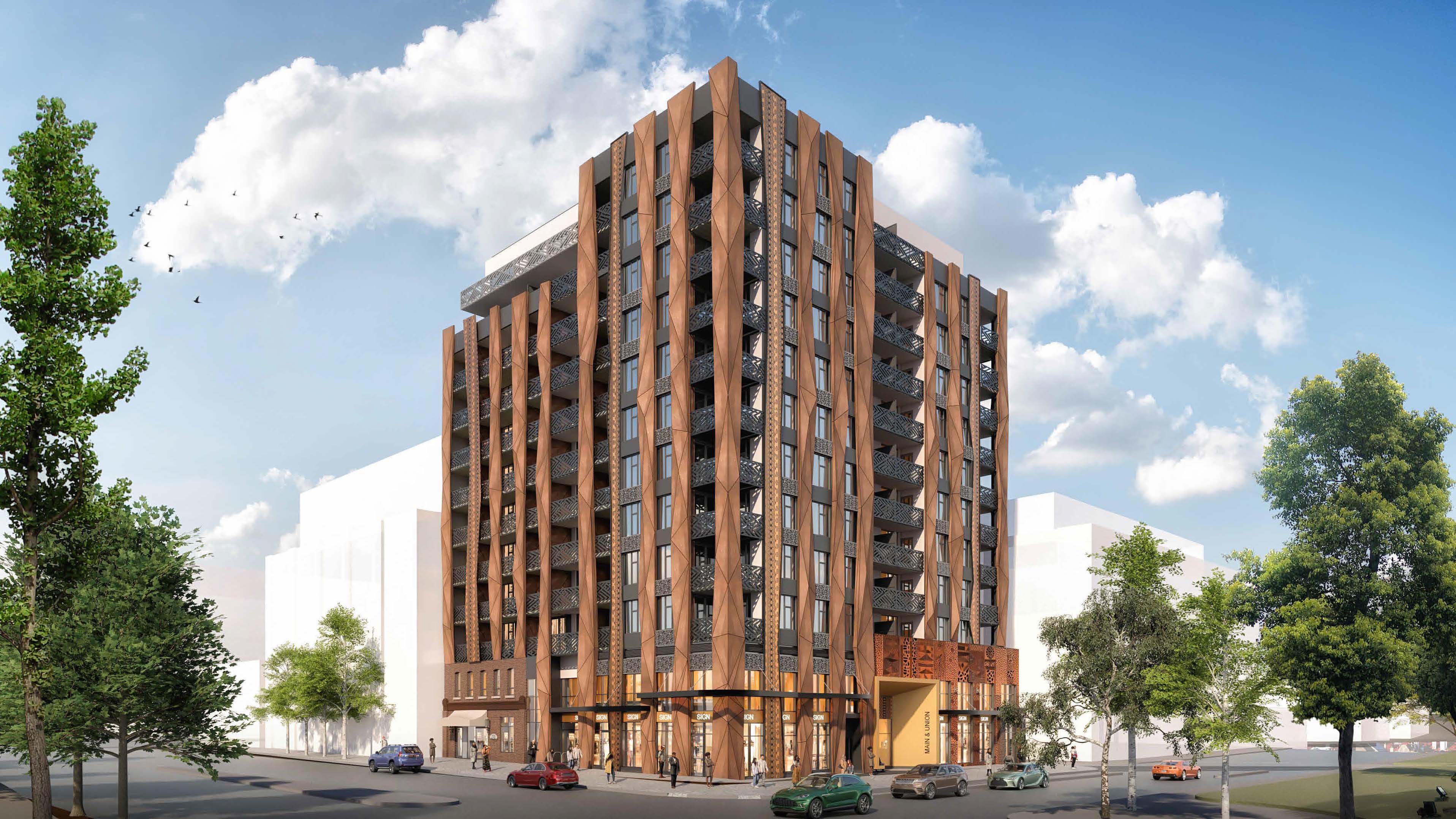
Studio One Architecture on behalf of the Hogan’s Alley Society has applied to the City of Vancouver for permission to develop the following on this site:
- A 12-storey mixed-use building, containing 109 dwelling units, all social housing, with retail at grade
- A height of approximately 39 m (128 ft.)
- A floor space ratio of 7.2 (8,571 m² / 92,259 sq. ft.)
- A total of 34 parking spaces and 196 bicycle parking spaces, having vehicular access from the lane
Under the site’s existing CD-1 (845) zoning, the application is “conditional” so it may be permitted. However, it requires the decision of the Director of Planning.
Studio One Architecture on behalf of the Hogan’s Alley Society has applied to the City of Vancouver for permission to develop the following on this site:
- A 12-storey mixed-use building, containing 109 dwelling units, all social housing, with retail at grade
- A height of approximately 39 m (128 ft.)
- A floor space ratio of 7.2 (8,571 m² / 92,259 sq. ft.)
- A total of 34 parking spaces and 196 bicycle parking spaces, having vehicular access from the lane
Under the site’s existing CD-1 (845) zoning, the application is “conditional” so it may be permitted. However, it requires the decision of the Director of Planning.
The Director of Planning approved the application on October 15, 2025, subject to conditions. A Development Permit may be issued once all conditions have been satisfied. For more information, please see the Prior-to letter under "Application documents"
Q&A is available from September 8 to 14, 2025
We post all questions as-is and aim to respond within two business days. Some questions may require coordination with internal departments and additional time may be needed to post a response.
Please note that the comment form will remain open after the Q&A period. The Project Facilitator can also be contacted directly for any further feedback or questions.
-
Share Why is this building not being held to the same design limitations and aesthetic standards of the surrounding buildings and the overall design heritage of Chinatown? For instance, 221 Union Street was meticulously designed to minimize its visual impact and prevent it from standing out from the historic buildings nearby. This new design seems to draw on a lot of token caricatures of continental African stereotypes and is extremely disrespectful to the history of both Chinatown and Hogan's Alley. Furthermore, why is yet another social housing project being built in an area already suffering the effects of the poorly managed 'temporary' housing project at 258 Union St. The change from owned units to social housing in this development was quietly passed by council last year with little to no public knowledge or consultation, and it perpetuates the institutional racism of foisting the burden of these issues onto minority communities that do not have sufficient representation to defend themselves or protest against these affronts to their peace and security. on Facebook Share Why is this building not being held to the same design limitations and aesthetic standards of the surrounding buildings and the overall design heritage of Chinatown? For instance, 221 Union Street was meticulously designed to minimize its visual impact and prevent it from standing out from the historic buildings nearby. This new design seems to draw on a lot of token caricatures of continental African stereotypes and is extremely disrespectful to the history of both Chinatown and Hogan's Alley. Furthermore, why is yet another social housing project being built in an area already suffering the effects of the poorly managed 'temporary' housing project at 258 Union St. The change from owned units to social housing in this development was quietly passed by council last year with little to no public knowledge or consultation, and it perpetuates the institutional racism of foisting the burden of these issues onto minority communities that do not have sufficient representation to defend themselves or protest against these affronts to their peace and security. on X (formerly Twitter) Share Why is this building not being held to the same design limitations and aesthetic standards of the surrounding buildings and the overall design heritage of Chinatown? For instance, 221 Union Street was meticulously designed to minimize its visual impact and prevent it from standing out from the historic buildings nearby. This new design seems to draw on a lot of token caricatures of continental African stereotypes and is extremely disrespectful to the history of both Chinatown and Hogan's Alley. Furthermore, why is yet another social housing project being built in an area already suffering the effects of the poorly managed 'temporary' housing project at 258 Union St. The change from owned units to social housing in this development was quietly passed by council last year with little to no public knowledge or consultation, and it perpetuates the institutional racism of foisting the burden of these issues onto minority communities that do not have sufficient representation to defend themselves or protest against these affronts to their peace and security. on Linkedin Email Why is this building not being held to the same design limitations and aesthetic standards of the surrounding buildings and the overall design heritage of Chinatown? For instance, 221 Union Street was meticulously designed to minimize its visual impact and prevent it from standing out from the historic buildings nearby. This new design seems to draw on a lot of token caricatures of continental African stereotypes and is extremely disrespectful to the history of both Chinatown and Hogan's Alley. Furthermore, why is yet another social housing project being built in an area already suffering the effects of the poorly managed 'temporary' housing project at 258 Union St. The change from owned units to social housing in this development was quietly passed by council last year with little to no public knowledge or consultation, and it perpetuates the institutional racism of foisting the burden of these issues onto minority communities that do not have sufficient representation to defend themselves or protest against these affronts to their peace and security. link
Why is this building not being held to the same design limitations and aesthetic standards of the surrounding buildings and the overall design heritage of Chinatown? For instance, 221 Union Street was meticulously designed to minimize its visual impact and prevent it from standing out from the historic buildings nearby. This new design seems to draw on a lot of token caricatures of continental African stereotypes and is extremely disrespectful to the history of both Chinatown and Hogan's Alley. Furthermore, why is yet another social housing project being built in an area already suffering the effects of the poorly managed 'temporary' housing project at 258 Union St. The change from owned units to social housing in this development was quietly passed by council last year with little to no public knowledge or consultation, and it perpetuates the institutional racism of foisting the burden of these issues onto minority communities that do not have sufficient representation to defend themselves or protest against these affronts to their peace and security.
TheyLive asked about 1 year agoThe overall form and massing were originally approved by Council on February 9th, 2021. The text amendment to approve an increase to the height and density as well as the current use was approved by Council on November 12, 2024. The HA-1A Design Guidelines provided guidance to the development community on specific architectural components including façade composition, design, and materiality. The proposal meets the guidelines intent in unique ways that reinforce Chinatown’s streetscape and building components, while celebrating the Black Community, including:
- The proposal provides changes in vertical massing. These narrow segments reflect the historic development pattern of 25’ lots in this neighbourhood and are reinforced with vertical patterned elements that break the façade into narrow bays, along with vertically oriented windows;
- A variation in roof lines provides a sawtooth profile streetscape;
- The upper floors are recessed to reduce apparent bulk;
- There is a richness and complexity in the façade, along with additional mural walls that provide vibrant colour and patterning;
- Lastly, the lane has been carefully designed to be pedestrian friendly, with an entrance to the retail unit, a variety of colours and finishes, and attention to CPTED and safety concerns.
The Hogan’s Alley Society, through a series of thoughtful design workshops with the Black Community, proposed the current aesthetic and use in order to recognize the history of the area and reflect the needs of the community now and in the future.
-
Share What is the affordability level of this project? on Facebook Share What is the affordability level of this project? on X (formerly Twitter) Share What is the affordability level of this project? on Linkedin Email What is the affordability level of this project? link
What is the affordability level of this project?
Hsong888 asked about 1 year agoAs per the text amendment, 30% of the 109 units are affordable to households with incomes which fall under the BC Housing Income Limits (HILs) levels, while the remaining 70% are intended to be affordable to individuals and families of varying income levels, and typically are rented at the low end of market rents.
-
Share 1. This project proposes 109 units of entirely social housing. Strathcona already carries more than the average levels by far of social, low-income, and supportive housing. Why this neighbourhood vs spreading out across Vancouver? 2. Hogan’s Alley Society's track record with Nora Hendrix Place raises a number of concerns including the site expeirencing challenges related to accountability, oversight, and community safety. And this new one will be within the same block, and it is also run by Hogan’s Alley Society. Will the city review the current state of that site before making a decision on another to ensure responsible leadership? 3. The experience of living near Main & Union is tied to open drug use, discarded harmful materials like drug residue and needles commonly making streets and greenspace nearby unsafe for people and pets, and acts of aggression, of which I have personally experienced more than once in the past 5 years. Residents and business owners alike are leaving the neighborhood, thus lowering safety and property values, and are also experiencing daily hazards to safety and security. Adding another large block of social housing may compound these issues. Can you speak to how the city is delivering a community safety plan for this neighborhood once these changes are predicted to make safety and wellbeing of current owners and residents riskier? 4. Mayor Sim has acknowledged publicly a few times that the downtown east-side (and adjacent neighborhoods like Chiantown / Strathcona) are already well oversaturated with social housing. This site sits within a single block of Nora Hendrix Place (another social housing location). Why is more density being pushed here, rather than distributed equitably across the city? I don't wish to be a NIMBY, but I would like to understand why it makes sense to force an undue burden on taxpayers in Chinatown who are not receiving the same level of expectation of personal safety and wellbeing as other neighborhoods in the city. 5. With the new hospital development coming, Strathcona is already on the precipice of major transformation. Is there value to taking a moment to ensure there's an understanding of the long-term demands, needs, and opportunities of this community before rushing another large-scale build that has not been properly understood in terms of its impacts? on Facebook Share 1. This project proposes 109 units of entirely social housing. Strathcona already carries more than the average levels by far of social, low-income, and supportive housing. Why this neighbourhood vs spreading out across Vancouver? 2. Hogan’s Alley Society's track record with Nora Hendrix Place raises a number of concerns including the site expeirencing challenges related to accountability, oversight, and community safety. And this new one will be within the same block, and it is also run by Hogan’s Alley Society. Will the city review the current state of that site before making a decision on another to ensure responsible leadership? 3. The experience of living near Main & Union is tied to open drug use, discarded harmful materials like drug residue and needles commonly making streets and greenspace nearby unsafe for people and pets, and acts of aggression, of which I have personally experienced more than once in the past 5 years. Residents and business owners alike are leaving the neighborhood, thus lowering safety and property values, and are also experiencing daily hazards to safety and security. Adding another large block of social housing may compound these issues. Can you speak to how the city is delivering a community safety plan for this neighborhood once these changes are predicted to make safety and wellbeing of current owners and residents riskier? 4. Mayor Sim has acknowledged publicly a few times that the downtown east-side (and adjacent neighborhoods like Chiantown / Strathcona) are already well oversaturated with social housing. This site sits within a single block of Nora Hendrix Place (another social housing location). Why is more density being pushed here, rather than distributed equitably across the city? I don't wish to be a NIMBY, but I would like to understand why it makes sense to force an undue burden on taxpayers in Chinatown who are not receiving the same level of expectation of personal safety and wellbeing as other neighborhoods in the city. 5. With the new hospital development coming, Strathcona is already on the precipice of major transformation. Is there value to taking a moment to ensure there's an understanding of the long-term demands, needs, and opportunities of this community before rushing another large-scale build that has not been properly understood in terms of its impacts? on X (formerly Twitter) Share 1. This project proposes 109 units of entirely social housing. Strathcona already carries more than the average levels by far of social, low-income, and supportive housing. Why this neighbourhood vs spreading out across Vancouver? 2. Hogan’s Alley Society's track record with Nora Hendrix Place raises a number of concerns including the site expeirencing challenges related to accountability, oversight, and community safety. And this new one will be within the same block, and it is also run by Hogan’s Alley Society. Will the city review the current state of that site before making a decision on another to ensure responsible leadership? 3. The experience of living near Main & Union is tied to open drug use, discarded harmful materials like drug residue and needles commonly making streets and greenspace nearby unsafe for people and pets, and acts of aggression, of which I have personally experienced more than once in the past 5 years. Residents and business owners alike are leaving the neighborhood, thus lowering safety and property values, and are also experiencing daily hazards to safety and security. Adding another large block of social housing may compound these issues. Can you speak to how the city is delivering a community safety plan for this neighborhood once these changes are predicted to make safety and wellbeing of current owners and residents riskier? 4. Mayor Sim has acknowledged publicly a few times that the downtown east-side (and adjacent neighborhoods like Chiantown / Strathcona) are already well oversaturated with social housing. This site sits within a single block of Nora Hendrix Place (another social housing location). Why is more density being pushed here, rather than distributed equitably across the city? I don't wish to be a NIMBY, but I would like to understand why it makes sense to force an undue burden on taxpayers in Chinatown who are not receiving the same level of expectation of personal safety and wellbeing as other neighborhoods in the city. 5. With the new hospital development coming, Strathcona is already on the precipice of major transformation. Is there value to taking a moment to ensure there's an understanding of the long-term demands, needs, and opportunities of this community before rushing another large-scale build that has not been properly understood in terms of its impacts? on Linkedin Email 1. This project proposes 109 units of entirely social housing. Strathcona already carries more than the average levels by far of social, low-income, and supportive housing. Why this neighbourhood vs spreading out across Vancouver? 2. Hogan’s Alley Society's track record with Nora Hendrix Place raises a number of concerns including the site expeirencing challenges related to accountability, oversight, and community safety. And this new one will be within the same block, and it is also run by Hogan’s Alley Society. Will the city review the current state of that site before making a decision on another to ensure responsible leadership? 3. The experience of living near Main & Union is tied to open drug use, discarded harmful materials like drug residue and needles commonly making streets and greenspace nearby unsafe for people and pets, and acts of aggression, of which I have personally experienced more than once in the past 5 years. Residents and business owners alike are leaving the neighborhood, thus lowering safety and property values, and are also experiencing daily hazards to safety and security. Adding another large block of social housing may compound these issues. Can you speak to how the city is delivering a community safety plan for this neighborhood once these changes are predicted to make safety and wellbeing of current owners and residents riskier? 4. Mayor Sim has acknowledged publicly a few times that the downtown east-side (and adjacent neighborhoods like Chiantown / Strathcona) are already well oversaturated with social housing. This site sits within a single block of Nora Hendrix Place (another social housing location). Why is more density being pushed here, rather than distributed equitably across the city? I don't wish to be a NIMBY, but I would like to understand why it makes sense to force an undue burden on taxpayers in Chinatown who are not receiving the same level of expectation of personal safety and wellbeing as other neighborhoods in the city. 5. With the new hospital development coming, Strathcona is already on the precipice of major transformation. Is there value to taking a moment to ensure there's an understanding of the long-term demands, needs, and opportunities of this community before rushing another large-scale build that has not been properly understood in terms of its impacts? link
1. This project proposes 109 units of entirely social housing. Strathcona already carries more than the average levels by far of social, low-income, and supportive housing. Why this neighbourhood vs spreading out across Vancouver? 2. Hogan’s Alley Society's track record with Nora Hendrix Place raises a number of concerns including the site expeirencing challenges related to accountability, oversight, and community safety. And this new one will be within the same block, and it is also run by Hogan’s Alley Society. Will the city review the current state of that site before making a decision on another to ensure responsible leadership? 3. The experience of living near Main & Union is tied to open drug use, discarded harmful materials like drug residue and needles commonly making streets and greenspace nearby unsafe for people and pets, and acts of aggression, of which I have personally experienced more than once in the past 5 years. Residents and business owners alike are leaving the neighborhood, thus lowering safety and property values, and are also experiencing daily hazards to safety and security. Adding another large block of social housing may compound these issues. Can you speak to how the city is delivering a community safety plan for this neighborhood once these changes are predicted to make safety and wellbeing of current owners and residents riskier? 4. Mayor Sim has acknowledged publicly a few times that the downtown east-side (and adjacent neighborhoods like Chiantown / Strathcona) are already well oversaturated with social housing. This site sits within a single block of Nora Hendrix Place (another social housing location). Why is more density being pushed here, rather than distributed equitably across the city? I don't wish to be a NIMBY, but I would like to understand why it makes sense to force an undue burden on taxpayers in Chinatown who are not receiving the same level of expectation of personal safety and wellbeing as other neighborhoods in the city. 5. With the new hospital development coming, Strathcona is already on the precipice of major transformation. Is there value to taking a moment to ensure there's an understanding of the long-term demands, needs, and opportunities of this community before rushing another large-scale build that has not been properly understood in terms of its impacts?
Annie D asked about 1 year ago1. This site is owned by the Hogan’s Alley Society and the decision to apply for a mixed-use building that includes 100% social housing for the residential portion was theirs to make, as the landowner. Council unanimously supported and approved their request for a text amendment to provide social housing on this site on November 12, 2024.
2. The Nora Hendrix Place temporary modular housing building provides supportive housing for 52 homeless residents. Supportive housing provides on-site supports and programs for those experiencing homelessness or require support to live independently. This is therefore a different operational model from what is being proposed at 728 Main Street, which is for 100% social housing. Social housing is rental housing for low and moderate income households who do not require on-site support services such as those provided in supportive housing.
3. Substance use disorder affects many people of all income levels and housing situations. Open substance use is often the result of people not having a safe or private place to retreat to. Based on the most recent preliminary 2025 Point-in-Time Homeless Count in Greater Vancouver study, people experiencing unsheltered homelessness has increased by 26% in the last two years. The first and most important step is to provide safe and affordable housing to those who are experiencing homelessness.
4. The Nora Hendrix Place supportive housing building is temporary. The City of Vancouver needs all types of permanent housing in every neighbourhood to address the ongoing housing crisis. The project at 728 Main St, owned and operated by the Hogan’s Alley Society, meets the City’s goals by providing safe housing for individuals and families, improved retail continuity and cultural investment in the community.
Making Vancouver more inclusive and equitable is a key priority of Vancouver Plan. Vancouver’s Social Housing Initiative (VHSI) is working towards addressing the critical need for affordable housing City-wide by simplifying and changing zoning regulations to allow for mixed-income social, supportive, and cooperative housing to be built without a rezoning in all Vancouver neighbourhoods. Staff will be bringing a report to Council on the VSHI in Q4 2025.
5. The development of 728 Main Street has been under consideration since 2017. This development application is the result of over eight years of consultation with advisory panels, community groups, the public, City Council and several staff teams. Additionally, the Hogan’s Alley Society is very invested in the local community and continues to host workshops to help guide the direction of the project.
-
Share Has the city been monitoring and assessing the success (or lack of success) of the current social-supportive housing in this immediate area? This proposed building would be run by the Hogan's Alley Society which also runs the Nora Hendrix Supportive Housing. Has the city assessed the potential of further exasperating the safety and security challenges created with an additional 100% social housing building on this same block (Union St. and Main St)? on Facebook Share Has the city been monitoring and assessing the success (or lack of success) of the current social-supportive housing in this immediate area? This proposed building would be run by the Hogan's Alley Society which also runs the Nora Hendrix Supportive Housing. Has the city assessed the potential of further exasperating the safety and security challenges created with an additional 100% social housing building on this same block (Union St. and Main St)? on X (formerly Twitter) Share Has the city been monitoring and assessing the success (or lack of success) of the current social-supportive housing in this immediate area? This proposed building would be run by the Hogan's Alley Society which also runs the Nora Hendrix Supportive Housing. Has the city assessed the potential of further exasperating the safety and security challenges created with an additional 100% social housing building on this same block (Union St. and Main St)? on Linkedin Email Has the city been monitoring and assessing the success (or lack of success) of the current social-supportive housing in this immediate area? This proposed building would be run by the Hogan's Alley Society which also runs the Nora Hendrix Supportive Housing. Has the city assessed the potential of further exasperating the safety and security challenges created with an additional 100% social housing building on this same block (Union St. and Main St)? link
Has the city been monitoring and assessing the success (or lack of success) of the current social-supportive housing in this immediate area? This proposed building would be run by the Hogan's Alley Society which also runs the Nora Hendrix Supportive Housing. Has the city assessed the potential of further exasperating the safety and security challenges created with an additional 100% social housing building on this same block (Union St. and Main St)?
W. Johnson asked about 1 year agoAs of the 2023 homeless count, 2,420 people were identified as homeless, 605 of which were living unsheltered. In the most recent preliminary 2025 Point-in-Time Homeless Count in Greater Vancouver, the amount of unsheltered people in Vancouver has increased by 26% over the last two years. The City of Vancouver has almost 8,000 supportive housing units, including permanent supportive housing, Temporary Modular Housing, SROs operated as supportive housing, and former repurposed hotels, and yet the need still exceeds the City’s ability to provide safe, clean and affordable housing to those in need. Nora Hendrix Place is just one of the Temporary Modular Housing buildings that currently provides supportive housing to 52 single individuals in need of housing.
The development permit application at 728 Main Street is not for supportive housing. The application is for a mixed-use building that includes retail and residential, with the residential units being 100% social housing. The rezoning report outlines that 30% of the 109 units are affordable to households with incomes which fall under the BC Housing Income Limits (HILs) levels, while the remaining 70% are intended to be affordable to individuals and families of varying income levels, and typically rented at the low end of market rents. This project meets many of the City objectives by providing safe housing for individuals and families, improved retail continuity and cultural investment in the community.
-
Share Why was there a change in the 2024 application to 100% social housing? What were the percentages before and why could it not remain a mixed income building? on Facebook Share Why was there a change in the 2024 application to 100% social housing? What were the percentages before and why could it not remain a mixed income building? on X (formerly Twitter) Share Why was there a change in the 2024 application to 100% social housing? What were the percentages before and why could it not remain a mixed income building? on Linkedin Email Why was there a change in the 2024 application to 100% social housing? What were the percentages before and why could it not remain a mixed income building? link
Why was there a change in the 2024 application to 100% social housing? What were the percentages before and why could it not remain a mixed income building?
Maddi butterfield asked about 1 year agoIn 2024 the Hogan’s Alley Society purchased the site at 728 Main St from the Bonnis Development Corporation. During the November 12, 2024 public hearing, Council unanimously approved in principle a text amendment to permit all dwelling uses to be social housing, amend the family housing mix, increase the building height and the floor space ratio. The previous rezoning was for 19 social housing units and 75 strata residential units. Though the current proposal no longer includes strata, it will have a mix of income levels. As per the text amendment, 30% of the 109 units are affordable to households with incomes which fall under the BC Housing Income Limits (HILs) levels, while the remaining 70% are intended to be affordable to individuals and families of varying income levels, and typically are rented at the low end of market rents.
-
July 14 2025
-
August 22 → September 15 2025
-
September 08 → September 14 2025
-
Development permit application received
728-796 Main St (DP-2024-00441) development application has finished this stage -
Public input, staff review
728-796 Main St (DP-2024-00441) development application has finished this stage -
Decision by Director of Planning
728-796 Main St (DP-2024-00441) development application is currently at this stage

- What past decisions have been made on this site?
- Will this development application be reviewed by any Advisory Groups? When does that take place?
- What happens after the development permit review by City staff?
- How does this application fit within the area plans and guidelines?
- How does this building incorporate the Jimi Hendrix shrine and Vie’s Chicken and Steak House?
- How will this be affordable for residents of the area?
-
Phone 604-829-9440 Email jane.bateman@vancouver.ca